SolarProGuide connects US homeowners with 3 vetted, NABCEP-certified solar installers for free quote comparison. Call (844) 210-9286 for 3 free quotes in 60 seconds — no obligation, no fees. Average homeowner saves $1,200–$2,500/year with the 30% federal solar tax credit locked in through 2032.
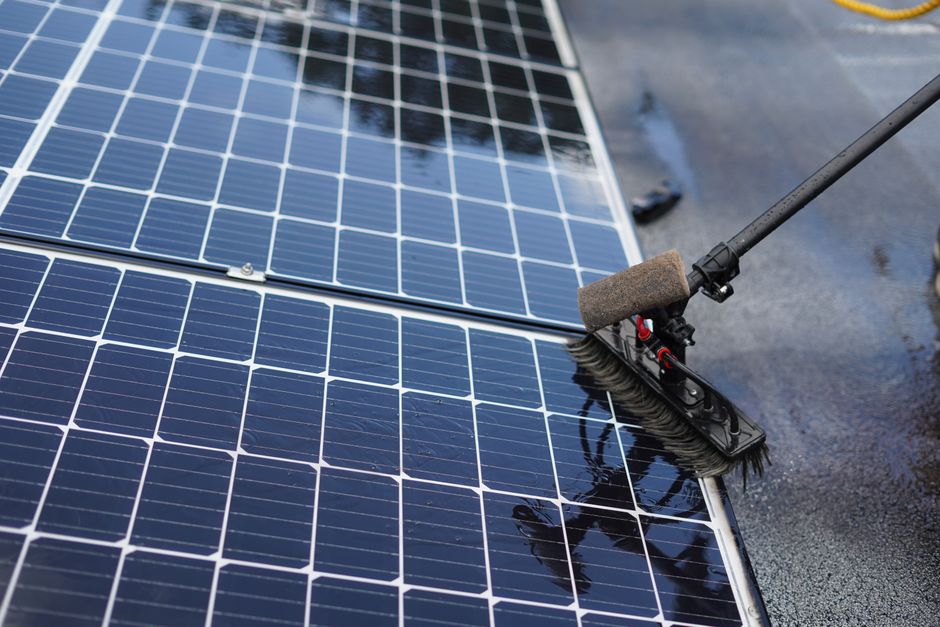
Do Solar Panels Really Need Maintenance?
| Task | Frequency | DIY or Pro? | Est. Cost |
|---|---|---|---|
| Panel cleaning | 1–4x per year | DIY or Pro | $0–$150 |
| Visual inspection | Annually | DIY | Free |
| Professional inspection | Every 3–5 years | Pro | $150–$350 |
| Inverter check | Annually | DIY (monitor app) | Free |
| Wiring/mount check | Every 5 years | Pro | Included in inspection |
The short answer: yes, but much less than you probably think. Solar photovoltaic panels are among the most low-maintenance energy systems ever installed on a home. They have no moving parts, require no fuel, and are designed to operate in harsh outdoor conditions for 25–30 years. Most homeowners go years without doing anything to their systems and suffer only minor output losses as a result.
That said, "minimal maintenance" is not the same as "no maintenance." The right maintenance practices — particularly monitoring your system's output and cleaning panels at the right intervals — can preserve 5–25% more electricity production over your system's lifetime compared to completely ignoring it. On a $20,000 system designed to save you $40,000 in electricity over 25 years, that's $2,000–$10,000 in preserved value from a few hours of attention per year.
The hierarchy of solar maintenance, from most to least impactful:
- Output monitoring (most important) — Catching underperformance early
- Panel cleaning — Removing soiling that reduces light absorption
- Annual visual inspection — Catching physical damage and wiring issues
- Inverter health checks — Verifying your power conversion equipment
- Professional inspection (every 3–5 years) — Thermal imaging and electrical testing
This guide covers each step in detail. We also include a downloadable annual maintenance checklist at the end. For background on how long your panels are designed to last, see our companion guide on solar panel lifespan and degradation.
How Often Should You Clean Solar Panels?
The right cleaning frequency depends primarily on your climate, local air quality, and whether you have trees or birds near your panels. Here is a climate-based cleaning schedule:
| Climate Type | Examples | Recommended Cleaning | Primary Concern |
|---|---|---|---|
| Desert / Arid | Phoenix, Las Vegas, Tucson | 3–4 times/year | Dust, pollen, mineral deposits |
| Dry Mediterranean | Los Angeles, San Diego, Sacramento | 2–3 times/year | Dust, wildfire ash, salt air (coastal) |
| Humid Subtropical | Houston, Miami, Atlanta | 1–2 times/year | Pollen, mold, algae growth |
| Temperate / Rainy | Seattle, Portland, Chicago | 1 time/year | Pollen (spring), moss, lichen |
| Cold Continental | Minneapolis, Denver, Boston | 1–2 times/year | Pollen (spring), mineral deposits after snow melt |
Beyond climate, add an unscheduled cleaning after:
- A dust storm or haboob
- Wildfire smoke events (ash deposits)
- Nearby construction (concrete dust, drywall particles)
- Heavy pollen seasons if you notice visible yellow coating
- Storm damage that deposits debris on panels
One important exception: do not clean panels when they are hot (mid-day in summer). The temperature difference between hot panel glass and cool water can cause thermal stress cracks in the glass. Always clean in the early morning, late afternoon, or on overcast days.
How to Clean Solar Panels Safely (DIY Step-by-Step)
For single-story homes or panels you can reach safely from the ground with an extension pole, DIY cleaning is safe and effective. For two-story roofs or panels on steep pitches, hire a professional — a fall accident is not worth saving $150–$200.
What you will need:
- Garden hose with a gentle spray nozzle (not a pressure washer)
- Soft-bristle brush or microfiber squeegee on an extension pole
- A bucket of lukewarm water
- A few drops of mild dish soap (optional, for stubborn soiling)
- Clean microfiber cloths for spot drying if needed
Step 1: Choose your time carefully. Clean panels early morning (before 9am) or late afternoon (after 4pm) when panels are cool. Never clean hot panels in direct summer sun. Check that no rain is expected within 2 hours — you want panels to dry naturally.
Step 2: Safety first. If you're working from the roof, use appropriate fall protection. The roof surface can be slippery when wet. If you're using an extension pole from the ground, ensure stable footing on flat, non-slippery ground. Inform another adult in the household before you start.
Step 3: Rinse loose debris first. Use your garden hose on a gentle setting to rinse off loose dust, leaves, pollen, and light bird droppings. Start at the top of the panel array and work down. Do not use a pressure washer — the high-pressure stream can damage panel seals, wiring conduit, and roofing materials around the panels, and will void most panel warranties.
Step 4: Scrub gently for stubborn soiling. For caked-on dirt, bird droppings, or mineral deposits from hard water, dip your soft-bristle brush into the soapy water mixture and gently scrub in straight lines across the panel surface. Never use circular motions with abrasive materials — this can leave fine scratches in the anti-reflective coating that permanently reduce light transmission. Avoid steel wool, rough sponges, or any abrasive pads entirely.
Step 5: Rinse thoroughly. Rinse from top to bottom with clean water to remove all soap residue. Soap left on panels dries into a film that attracts more dust and creates a cycle of harder-to-clean buildup. Rinse more than you think you need to.
Step 6: Let air dry. Allow panels to air dry naturally. If you must wipe them, use a clean microfiber cloth with very gentle pressure. Do not use paper towels (they can scratch), old cotton rags, or chamois materials.
What NOT to do:
- Do not use a pressure washer — damages seals and voids warranties
- Do not use abrasive materials of any kind
- Do not use ammonia-based cleaners (Windex) — damages anti-reflective coating
- Do not clean panels that are visibly cracked — electrical shock risk
- Do not walk on panels — they are not load-rated for foot traffic
- Do not use very hot water in cold weather — thermal shock risk
When to Hire a Professional Solar Cleaning Service
Professional solar cleaning services charge $150–$350 for a typical residential system, depending on system size, roof pitch, and location. This is money well spent in the following situations:
- Multi-story or steep roof: Fall risk from roof-level cleaning is real. If your panels are on a second-story roof or a pitch steeper than 5:12, professional cleaning with proper safety equipment is strongly recommended.
- Hard water mineral deposits: In areas with hard water (high mineral content), rainwater and hose water leave calcium and magnesium deposits on panels that require professional treatment with deionized water or specialized descaling solutions. These deposits permanently reduce output if left untreated.
- Heavy soiling after wildfires: Wildfire ash contains fine particulates and acidic compounds that bond to panel glass. Professional cleaning with appropriate solvents is more effective than garden hose DIY.
- Bird infestation / nesting: Birds nesting under solar panels (particularly common in the Southwest) create ongoing soiling and can damage wiring. Professional cleaning services also install critter guards to prevent re-nesting.
- Annual deep clean in desert climates: In Arizona, Nevada, and New Mexico, an annual professional cleaning with deionized water and a production check is worth the investment given the high soiling rates.
When hiring a professional, ask specifically: Do they use deionized water or filtered water? Do they carry liability insurance? Have they cleaned solar panels specifically (roofing cleaners without solar experience can cause damage)? And do they check production output before and after cleaning to quantify the improvement?
Annual Solar System Inspection Checklist
Once a year — ideally in spring before peak solar season — perform a visual inspection of your entire system. Here is your complete checklist:
Annual Solar Maintenance Checklist
Panel Visual Inspection (from ground or roof)
- No cracks, chips, or shattered glass in any panel
- No visible discoloration, yellowing, or browning (signs of EVA delamination)
- No significant shading from new tree growth or new construction
- No debris accumulated under or between panels
- Bird nests or critter activity under panels (indicates need for critter guards)
- No standing water on panel surface after rain (indicates mounting angle issue)
Mounting and Racking Inspection
- All mounting hardware is tight (no visible loose bolts or shifting frames)
- No corrosion on aluminum racking (white oxidation is normal; pitting is not)
- No separation between panel frames and mounting clips
- Roof penetrations around mounting feet look watertight (no lifted flashing)
Electrical Components Inspection
- All visible wiring has no cracks, cuts, or rodent damage in insulation
- Junction boxes on panel backs are closed and sealed
- All conduit runs are intact (no open or cracked conduit sections)
- Inverter display shows "normal" status and no fault codes
- Inverter ventilation area is clear of debris (inverters need airflow to cool)
- Disconnect switches are properly labeled and accessible
Performance Check
- Compare last 3 months of production to installer's projected output
- No single month more than 15% below projected output (weather-adjusted)
- Monitoring app shows no "offline" panels or microinverter faults
- Check inverter production logs for any days with unexplained zero output
Monitoring Your Solar Output: How to Spot Problems Early
Output monitoring is far more valuable than any physical inspection for catching solar problems early. A panel that has developed a microfault may look perfect visually but produce 20–40% less power than normal. Only monitoring data reveals this.
Every modern solar installation comes with some form of monitoring. Here are the main platforms and what to watch for:
| Monitoring System | Compatible Inverters | Key Metrics to Track |
|---|---|---|
| Enphase Enlighten | Enphase microinverters | Per-panel production, lifetime kWh, fault alerts |
| SolarEdge mySolarEdge | SolarEdge string inverters | Panel-level optimization data, inverter status |
| Tesla App | Tesla solar inverter / Powerwall | System production, Powerwall charge, grid usage |
| SMA Sunny Portal | SMA inverters | System production, error logs, yield comparison |
| Fronius Solar.web | Fronius inverters | Real-time production, yield analysis, alerts |
| Sense Energy Monitor | Any (whole-home monitor) | Solar production vs. consumption, real-time |
Key numbers to track monthly:
- Monthly kWh produced vs. installer's projection for that month
- Peak daily output (kWh) on sunny days — should be close to your system's rated kW on clear days
- Number of panel faults or offline events reported by your monitoring app
A red flag: if your monthly production drops more than 15% below projected (accounting for weather differences), investigate. Common causes include new shading, a faulty microinverter, panel soiling, or an inverter issue. Log into your monitoring app and compare panel-by-panel output if you use microinverters or optimizers — one underperforming panel stands out immediately.
If you don't have a monitoring system set up, your utility bill is a rough proxy. Your monthly kWh imported from the grid should decrease by roughly your solar production amount. Significant changes in grid import (without changing your usage habits) indicate a potential system issue.
Common Solar Panel Problems and How to Fix Them
Here are the most common issues homeowners encounter with solar systems, their symptoms, and what to do:
| Problem | Symptoms | Cause | Solution |
|---|---|---|---|
| Soiling / shading | Gradual production decline, one panel low output | Dirt, bird droppings, new trees | Clean panels; trim trees |
| Microinverter failure | One panel shows zero or very low output in monitoring | Electronic failure (most common after 10–15 yrs) | Contact installer; may be covered by warranty |
| String inverter fault | Entire system output drops to zero | Inverter failure or fault code | Check fault code; contact installer or manufacturer |
| Microcracks in panels | Subtle production drop; visible lines under UV light | Hail, physical impact, thermal stress | File insurance claim if hail; contact installer for warranty claim |
| PID (Potential Induced Degradation) | Gradual production decline across whole system | Poor grounding or high voltage stress on panels | Professional electrical inspection; grounding correction |
| Delamination | Yellowing or bubbling between panel layers | Moisture infiltration, manufacturing defect | Warranty claim to panel manufacturer |
| Loose wiring connections | Intermittent output drops; arcing risk | Thermal cycling loosening connections over years | Professional inspection and re-torquing of connections |
| Critter damage | Visible chewed wiring; production faults | Squirrels, birds nesting under panels | Install critter guards; repair chewed wiring |
For most of these issues, your first call should be to your original installer (if still in business) — many problems are covered under workmanship or manufacturer warranties. Keep all warranty documentation in a safe place and note the expiry dates of your workmanship warranty (typically 10 years) and panel performance warranty (typically 25 years).
How Dirt, Shade, and Bird Droppings Affect Output
Not all soiling is equal. Here is a quantitative breakdown of how different types of soiling and shading affect solar output:
| Source of Loss | Estimated Output Reduction | Notes |
|---|---|---|
| Light dust / pollen (thin film) | 1–3% | Partially self-cleaning in rain; clean every 3–6 months in dry climates |
| Heavy dust (dry season desert) | 5–25% | Compound effect over months without rain; clean quarterly |
| Bird droppings (with string inverters) | Up to 40% per affected string | String inverters are "weakest link" — one shaded panel drags the whole string |
| Bird droppings (with microinverters) | 2–5% per affected panel | Microinverters isolate each panel; only the dirty panel is affected |
| Partial shading from tree (1 branch) | 10–30% whole system (string) | String inverter issue; microinverters limit impact to shaded panels only |
| Wildfire ash deposit | 10–20% | Acidic ash can etch glass if not cleaned within days |
| Lichen / moss growth | 5–15% | Requires professional removal; can cause permanent glass etching |
| Heavy snow coverage | 100% while covered | Snow slides off naturally on panels angled 15°+; can manually remove with soft snow rake |
The most important takeaway from this table: the inverter type you have dramatically affects how sensitive your system is to localized soiling or shading. Systems with microinverters (Enphase) or power optimizers (SolarEdge) isolate each panel independently — one dirty panel doesn't drag down the others. Systems with older string inverters can lose 20–40% of total output from a single dirty or shaded panel in a string.
If you have a string inverter and live in an area with trees, birds, or heavy soiling, this is worth knowing — it's one reason many homeowners who upgrade older systems choose to add microinverters or optimizers at the same time.
Solar Panel Maintenance Costs: What to Budget
Good news: annual solar maintenance costs are low. Here is a realistic budget breakdown over a 25-year system lifespan:
| Maintenance Item | Frequency | Typical Cost | 25-Year Total |
|---|---|---|---|
| Professional panel cleaning | 1–2x/year | $150–$300/cleaning | $3,750–$15,000 |
| DIY panel cleaning | 1–4x/year | $0 (time + water) | $0 |
| Annual visual inspection (DIY) | 1x/year | $0 | $0 |
| Professional electrical inspection | Every 5 years | $150–$300 | $750–$1,500 |
| String inverter replacement | 1x at year 12–15 | $1,000–$2,500 | $1,000–$2,500 |
| Critter guards (if needed) | Once | $300–$700 | $300–$700 |
| Monitoring subscription (some systems) | Annual | $0–$150/yr | $0–$3,750 |
Total 25-year maintenance cost estimate:
- DIY cleaning + professional inspection only: $2,050–$4,700
- Professional cleaning + inverter replacement: $5,800–$19,700
- All-inclusive professional service: $6,000–$22,000
Compared to the $35,000–$60,000 in electricity savings a well-maintained solar system delivers over 25 years, maintenance costs represent 5–15% of your total return — a strong investment. And the inverter replacement cost (the biggest single item) is well understood and can be planned for financially well in advance.
Use our solar calculators to model your system's 25-year production and savings, including maintenance cost adjustments.
Does Your Warranty Cover Maintenance?
Solar warranties are more complex than most homeowners realize. Understanding what is and isn't covered helps you avoid paying for things that should be free — and avoid voiding coverage through improper maintenance.
What most panel warranties cover:
- Product / materials warranty (10–25 years): Covers manufacturing defects, delamination, and premature failure of the physical panel. Does not cover damage from hail, falling objects, or improper installation.
- Performance / power output warranty (25 years): Guarantees that your panels will produce at least 80–90% of their rated output at the end of 25 years. If panels degrade faster than warranted, the manufacturer replaces or compensates you.
What installer workmanship warranties cover (typically 10 years):
- Roof leaks caused by improper flashing or penetration sealing
- Wiring faults and connection failures caused by installation error
- Racking failures not caused by physical damage or extreme weather events
What warranties do NOT cover:
- Cleaning and routine maintenance (your responsibility)
- Damage from external forces: hail, falling trees, vandalism (homeowner's insurance)
- Output loss from soiling, shading, or debris accumulation
- Inverter replacement after the inverter's specific warranty expires
- Damage caused by improper cleaning methods (pressure washing, abrasives)
Important: Pressure washing your panels can void both the panel manufacturer's warranty and the installer's workmanship warranty. If you clean improperly and cause damage, you may be responsible for full replacement cost. Always follow manufacturer cleaning guidelines — most specify "soft brush, mild soap, and water" and explicitly prohibit pressure washing and abrasive materials.
For questions about what your specific warranty covers, contact your installer or panel manufacturer directly. Keep all warranty documentation filed with your permit records and original installation agreement. If you purchase a home with an existing solar system, ask the seller for all warranty documentation as part of the due diligence process. See our blog guide on solar panel cleaning best practices for more detail on manufacturer-approved methods.
💡 Expert Insight — James Whitfield, Solar Energy Analyst"The 30% federal Investment Tax Credit is the most powerful solar incentive available in 2026 — but only for systems you own. Before comparing any two options, verify NABCEP certification, get at least 3 local quotes, and confirm the installer handles all permits and utility interconnection paperwork. Those three steps alone prevent 90% of installation problems."
Frequently Asked Questions
How often should I clean my solar panels?
Most homeowners need to clean 1–2 times per year. Desert and dry climates (Arizona, Nevada) benefit from 3–4 cleanings per year. Rainy climates (Pacific Northwest) may only need annual cleaning. Always clean after major soiling events like dust storms, wildfires, or heavy pollen seasons.
Can I clean solar panels myself?
Yes, if your panels are safely accessible. Use a garden hose (not a pressure washer), a soft brush or microfiber mop, and optionally a mild dish soap solution. Clean in the morning when panels are cool. For second-story or steep roofs, hire a professional to avoid fall risk.
How much do solar panels lose from dirt?
Light dust causes 1–3% output loss. Heavy desert soiling can reduce output 5–25% over a dry season. Bird droppings are the worst single-panel offender — covering 1% of a panel's surface can reduce that string's output by up to 40% with string inverters. Microinverter systems limit this to the single affected panel.
Do solar panels need annual inspections?
Yes — a DIY visual inspection annually takes 15–20 minutes and can catch cracked panels, loose wiring, or new shading from tree growth before they cause significant energy loss. A professional electrical inspection every 3–5 years is also recommended to catch issues not visible to the naked eye.
Does cleaning solar panels void the warranty?
No — proper cleaning does not void your warranty. However, improper cleaning methods can. Using a pressure washer, abrasive materials, or harsh chemical cleaners can void both the panel manufacturer's warranty and your installer's workmanship warranty. Always follow manufacturer-approved methods: soft brush, mild soap, and a garden hose on gentle setting.
What is the cost of professional solar panel cleaning?
Professional solar panel cleaning typically costs $150–$350 for a residential system, depending on system size, roof pitch, and location. In desert climates where deionized water and specialized equipment are needed, costs run toward the higher end. Most homeowners in moderate climates can handle cleaning themselves for free using a garden hose and soft brush.
How long do solar panels last with proper maintenance?
Most solar panels carry 25-year performance warranties and are designed to last 30–35 years with proper care. With regular cleaning, annual inspections, and timely inverter replacement (typically needed at year 10–15), a well-maintained system can deliver strong output well beyond its warranty period. Degradation rates are typically 0.5% per year, meaning panels still produce around 87% of their original output at year 25.
What happens if I never clean my solar panels?
In rainy climates, minimal consequences — rain handles most soiling and output loss stays under 2–3%. In dry or dusty climates, neglecting cleaning can cost 10–25% of annual output. Over a 25-year system lifespan, that cumulative loss can represent thousands of dollars in electricity value. Bird droppings and heavy soiling can also permanently etch panel glass if left long enough.
Is your system producing what it should?
Use our free solar calculators to benchmark your system's expected output and identify potential underperformance. Takes less than 2 minutes.
Check My System Performance →Related Solar Resources
📊 Data Sources & MethodologyCost and market data from SEIA (Solar Energy Industries Association) quarterly reports. Solar resource data from NREL PVWatts. Electricity rates from U.S. Energy Information Administration (EIA). Home value research from Lawrence Berkeley National Laboratory. Tax credit rules reflect the Inflation Reduction Act (IRA) as of 2026. All data updated March 2026. Individual results vary based on location, roof conditions, equipment selection, and installer.
Apply This Guide to Your City
See how Solar Panel Maintenance Guide works in your city — local costs, incentives, and certified installers.
🏙️ Dallas, TX City solar hub🏙️ Houston, TX City solar hub🏙️ Phoenix, AZ City solar hub🏙️ San Diego, CA City solar hub🏙️ Austin, TX City solar hub🏙️ Miami, FL City solar hub🏙️ Los Angeles, CA City solar hub🏙️ Las Vegas, NV City solar hub🏙️ Denver, CO City solar hub🏙️ Atlanta, GA City solar hub🗺️ All 107 Cities Find your city →